
Table of Contents
- The problem: too much waste, too little useful information
- The challenge of managing dispersed resources
- Industrial Symbiosis: where territorial intelligence begins
- Resource digitalisation: maps that drive decisions
- Real cases of territorial success: MAPPING surplus resources
- What is not measured, is not managed
- Direct benefits for governments and business associations
- FAQs
- What now?
Industrial, agricultural and urban waste is not just an environmental challenge… it is also a dormant economic opportunity. That said, to make the most of it, we need data, collaboration and a systemic vision.
In this article, you will discover how industrial symbiosis, combined with intelligent digitalisation tools such as SYNER, enables local governments, development agencies and business associations to activate new circular business models. We will talk about waste maps, synergies between companies, and how to make strategic decisions based on concrete information. Because a sustainable future is not improvised: it is planned with data.
The problem: too much waste, too little useful information
Within the framework of the circular economy, the concept of “waste” disappears: everything becomes a useful resource that can be reintroduced into the economy. But in order to turn waste into resources, the first step is knowing that they exist, where they are and who generates them.
The major issue today is that this information is largely inaccessible: there is a lack of discrete (non-aggregated), useful data on waste, water and energy, or the data is inaccessible. For example, we know a great deal about potato crisp consumption in supermarkets, but almost nothing about which companies generate residual heat in an industrial estate. European Waste Codes (EWC), for example, are not designed to trace recoverable materials, but rather to collect taxes. This blocks access to key opportunities.
The challenge of managing dispersed resources
Our current economic system extracts materials, processes them through a series of factories, and then disperses them across the territory so they can reach consumers. To recover value from them again, we need to reconcentrate them. But this is not possible without knowing where they are or in what quantity.
According to Eurostat (2022), only 25–30% of waste is recovered, and only the most profitable fraction. The rest — 70% — is lost, representing a true ecological bankruptcy.
So what is the solution? Digitalisation and collaboration.
Industrial Symbiosis: where territorial intelligence begins
Industrial symbiosis is a business strategy that promotes collaboration between companies from different sectors in order to turn surplus resources into new business opportunities.
What is surplus to one company can become raw material for another.
For governments, clusters or industrial estate managers, this translates into:
- Waste reduction.
- Promotion of local innovation.
- Improved business competitiveness and resilience.
- Creation of new green jobs.
A real example of an industrial symbiosis project is “Manresa en Simbiosis”, where the Bufalvent Business Association is driving real opportunities for material and energy exchange, such as the energy community “Manresa Ilumina”, the first renewable energy project of its kind to be implemented among companies in an industrial estate. But for this to work, we need an ecosystem-wide vision of the territory.
Resource digitalisation: maps that drive decisions
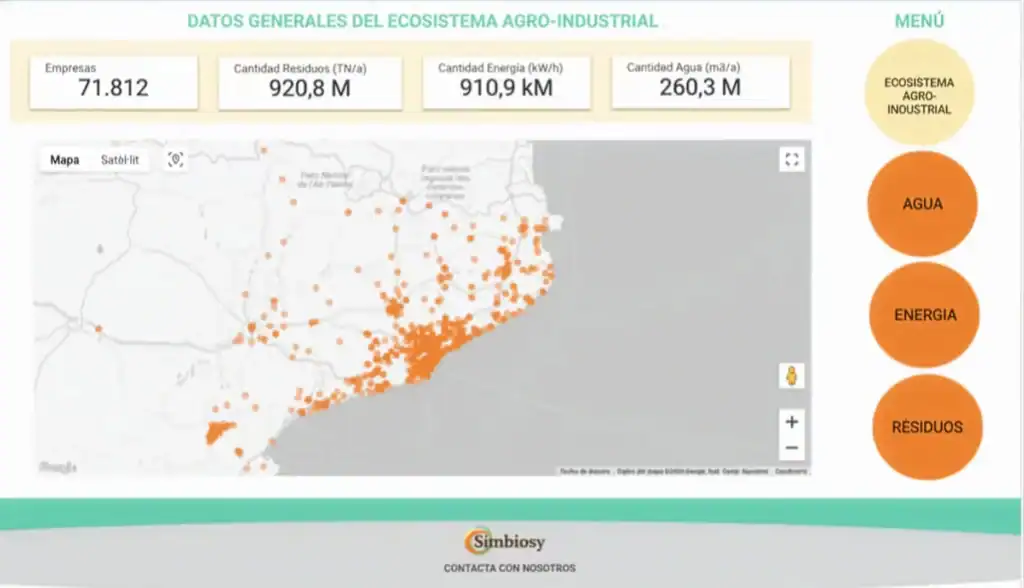
Mapping tools make it possible to gain this global territorial vision through surplus resource maps. These maps identify:
- Which companies generate waste.
- Which others could make use of it.
- Where they are located.
- In what quantities they produce or consume.
These maps are not based on confidential data, but on intelligent estimations that cross-reference open information such as NACE codes, turnover, land use, declared waste and so on, together with expert knowledge and database analysis. In this way, it becomes possible to generate operational information sufficient to propose real synergies.
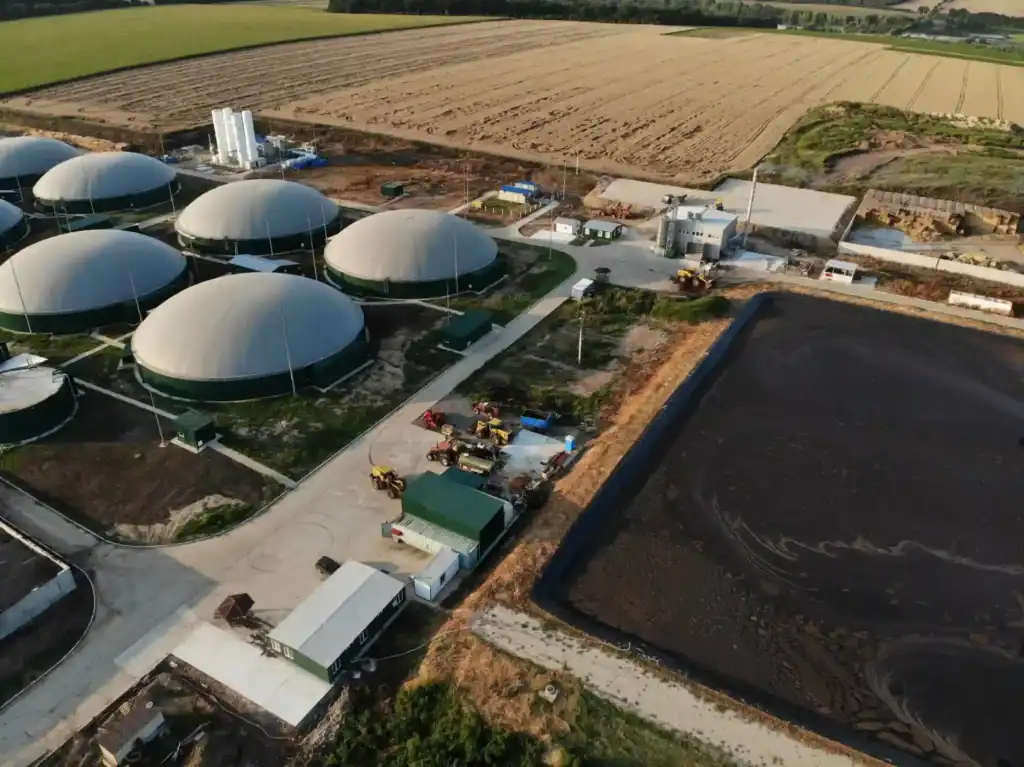
Example: estimating the organic waste of a territory (agri-food industry, livestock waste, forestry prunings, sewage sludge, the organic fraction of municipal waste, etc.) in order to analyse whether it is capable of supplying an anaerobic digestion plant.
Real cases of territorial success: MAPPING surplus resources
Terra Alta: From forgotten forest to biomass with a future
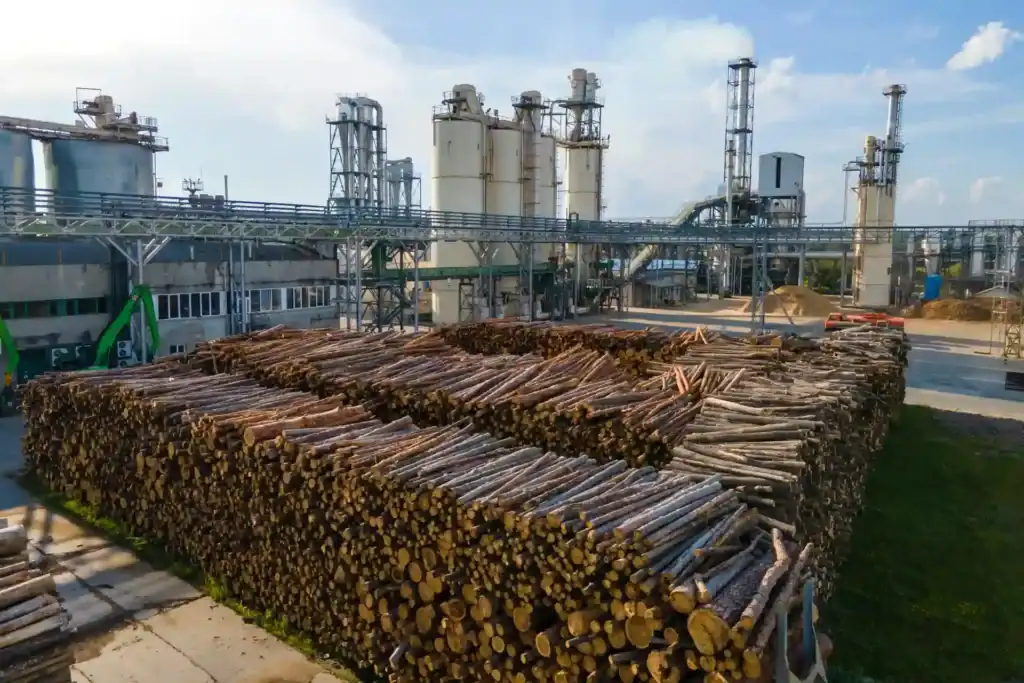
In this agricultural and forestry region, mapping made it possible to estimate a potential of 42,000 tonnes/year of woody biomass, of which 20,000 were economically viable as fuel for biomass boilers.
Result: it was possible to define the best location for a biomass logistics hub and activate its value chain with local companies (biochar producers, stove manufacturers, anaerobic digestion, etc.).
Berguedà: The region that can become energy self-sufficient
With 74,000 t/year of forest biomass and 31,000 t/year of agricultural biomass, plus organic waste and manure, 100% of the territory’s thermal energy demand could be covered. In addition, its capacity for photovoltaic and hydraulic energy was estimated.
What does that mean for a local council? Energy planning based on local resources, emissions reduction and job creation.
What is not measured, is not managed
The great value of these tools lies in their capacity to estimate the data needed in order to:
- Make data-driven decisions.
- Plan exchange networks for energy, water or materials.
- Visualise hidden synergies.
- Avoid pointless investments.
- Drive circular economic models without waiting for “perfect” data.
Surplus resource maps make it possible to answer questions such as:
- Which companies generate recoverable waste?
- Which industrial estates have compatible energy demand?
- Where would a heat network or treatment plant be viable?
Direct benefits for governments and business associations
- Sustainable local economic development.
- Stronger public-private collaboration.
- Reduction of emissions and waste.
- Optimisation of industrial infrastructure.
- Job creation in green sectors.
It also makes it possible to integrate waste, energy, urban planning and economic development policies into a single circular territory strategy.
FAQs
Do I need confidential company data to get started?
No. SYNER mapping estimates are based on open data and validated statistical models.
Can it be applied to any territory?
Yes. Once the territorial framework has been defined, tailored maps of waste, water, energy and biomass can be generated.
What is needed to activate an industrial symbiosis project?
The first step is to analyse the territory. A data analysis tool such as MAPPING is a key step in starting any industrial symbiosis project.
What now?
If you manage a territory, an industrial estate, or are part of a business association, you have a unique opportunity to lead change.
Because yes: working together is smart business.
Take the first step. Activate a surplus resource mapping project in your municipality or industrial estate and discover a new potential for circular economic development.