


Table of Contents
- Where is the gap?
- And how do I imagine this circular industry of the future?
- The Infrastructure of Circular Industrial Estates
- Renewable energy facilities
- Facilities for smart Waste / Resources management
- Facilities for water management
- Sustainable mobility
- Infrastructure for innovation
- Intangible infrastructure: the facilitators of Industrial Symbiosis
- And I finish with industrial symbiosis: Conclusion
Industry is one of the main pillars of the economy. But our industry consumes a great deal of energy and resources, with significant carbon emissions and a heavy dependence on the availability of resources. This not only puts pressure on our planet’s resources, but also contributes to climate change.
Every productive system in a territory consumes resources and generates waste. The resources it consumes are either from domestic extraction — produced or extracted within the territory — or imported from outside, which is the vast majority in the Barcelona Metropolitan Region. Unfortunately, the waste generated remains very high and represents a clear demonstration of the inefficiency of the productive system.
The RMB represents approximately 50% of Catalonia’s productive system. In terms of waste generation, we could say this means approximately:
1.9 M tonnes/year of industrial waste, approx. 8,500 companies
2.5 M tonnes/year of construction and demolition waste, CDW
2.0 M tonnes/year of municipal waste
According to data from the ARC, 80% of industrial waste and 56% of CDW are recovered; this means that 1,520,000 tonnes/year of materials from companies in the RMB and 1,400,000 tonnes/year of construction waste re-enter the RMB’s economic system.
If we understand circularity potential as the amount of resources that a given territory generates as by-products/waste with the possibility of becoming raw materials again and re-entering the economic system, at first sight, the circularity of the RMB is impressive. But reality shows us that, in general terms, only 12% of all materials used come from recycling! According to the latest report by “The Circularity Gap Report Initiative”, from 2021, the global economy is only 8.6% circular…
Where is the gap?
As with any complex issue, the causes are varied, affect many actors and occur at different levels of action. But if I had to summarize it in one word, it would be MARKET. The low quality of the waste collected prevents sufficient end markets from being found, while recycled-material markets are not sufficiently encouraged and therefore do not create the need to increase recycling. Everything must have an economic motivation in order to become truly viable: let us therefore change the rules of the game so that what we want/need to become a reality is genuinely good business — in this case, zero waste.
Working along the lines of rewarding, with the available regulatory/fiscal tools, a market that values and rewards material recovery and the associated technological and eco-design development is an intelligent way to regulate this market toward strategies of maximum efficiency in the use of resources. If there is a market for recycled materials (there are consumers who buy them), there will be high-quality material recovery, which will demand products made with recoverable materials and reject products made with “bad” materials. And there will be consumers because their purchase is initially “subsidized”.
Another major barrier to business innovation required by all these new business models is municipal authorization. It will increasingly be common to encounter applications for an ACTIVITY LICENSE that fall outside the “standard”. We need to be able to create an “authorization” structure flexible enough to accommodate these new activities without restricting them with architectural, infrastructure-related, or other limitations. And this means relieving the municipal technicians in charge of the license of this responsibility, or at least giving them the necessary support to respond safely to the company’s needs while ensuring everyone’s safety.
And speaking of licenses, it would be very interesting and positive to include, in the license application, a study on the potential for synergies with other companies already established there. In this way, the license contributes, on the one hand, to the concentration of information about resources and therefore to the creation of the industrial ecosystem in the industrial estate, and on the other, increases the entrepreneur’s environmental awareness. Measures like this could become positive value points for certain companies seeking high-quality spaces and environmental excellence.
The RMB is a rich ecosystem of productive companies from various sectors where the opportunities to close material cycles and obtain economic benefit from waste are great: we have the knowledge and the technology, we have the companies and WE HAVE WASTE!
We could consider waste as another resource that the territory possesses, alongside water, sun, land, some minerals, and so on. If we did so, we would generate economic activity while reducing dependence on materials from outside. And this would have maximum impact on those materials considered critical for companies in the territory, whether because they are scarce, have a high environmental impact, or because we are highly dependent on them.
According to data from the material flow accounts, IDESCAT 2017, Catalonia imported 25 Mt of raw materials in 2017. If all waste generated were converted into recovered raw materials, we could reduce our dependence on external materials by 51%.
But to achieve “zero waste”, the system must be designed for it; we face the challenge of creating the circular industry of the future.
And how do I imagine this circular industry of the future?
Well, I imagine companies whose waste/by-products become the raw materials of others, creating synergies among them within a diverse and regenerative industrial ecosystem, where waste does not exist and all energy comes from the sun; just like in a forest, in a natural ecosystem.
And they can do this because companies have designed their products so that this can happen, using materials technologically prepared to last and be recycled; easily repairable products, with a powerful and effective market for spare parts or 3D printing for short and special production runs.
Or companies that have “decarbonized” by offering services instead of products — hours of light instead of light bulbs, for example; companies that are able to remanufacture their own products, restoring by design those worn, damaged or obsolete parts in order to offer them back to the market as new products, with full warranty, while having reused most of the product!
I imagine clean companies, using renewable energy, “living” in smart industrial estates with access to renewable resources — district heating, regenerated water networks, energy communities, and so on — and shared services, such as an energy manager, an industrial recycling center, shared electric vehicles, and more.
And I imagine all these companies connected through data about their resources and surplus waste, combined with data about available recycling/recovery technologies, making it possible to identify synergies between companies and enabling them to form part of this large industrial ecosystem, efficient in its use of resources, competitive and creating positive impacts.
Let’s take it step by step. In addition to the great task of raising awareness and supporting companies individually in their own transition toward the circular economy — eco-design, switching to renewables, energy efficiency, new business models such as remanufacturing or servitization — economic activity spaces must also change; they must be capable of hosting the circular industry of the future, and they must know how to manage it.
The Infrastructure of Circular Industrial Estates
And what type of facilities will we need?
Renewable energy facilities
Energy is one of the resources with the greatest impact on companies’ operating accounts. Energy must be supplied from 100% renewable sources, both thermal and electrical, and its efficient use in companies must be encouraged by taking advantage of all renewable resources available in the territory.
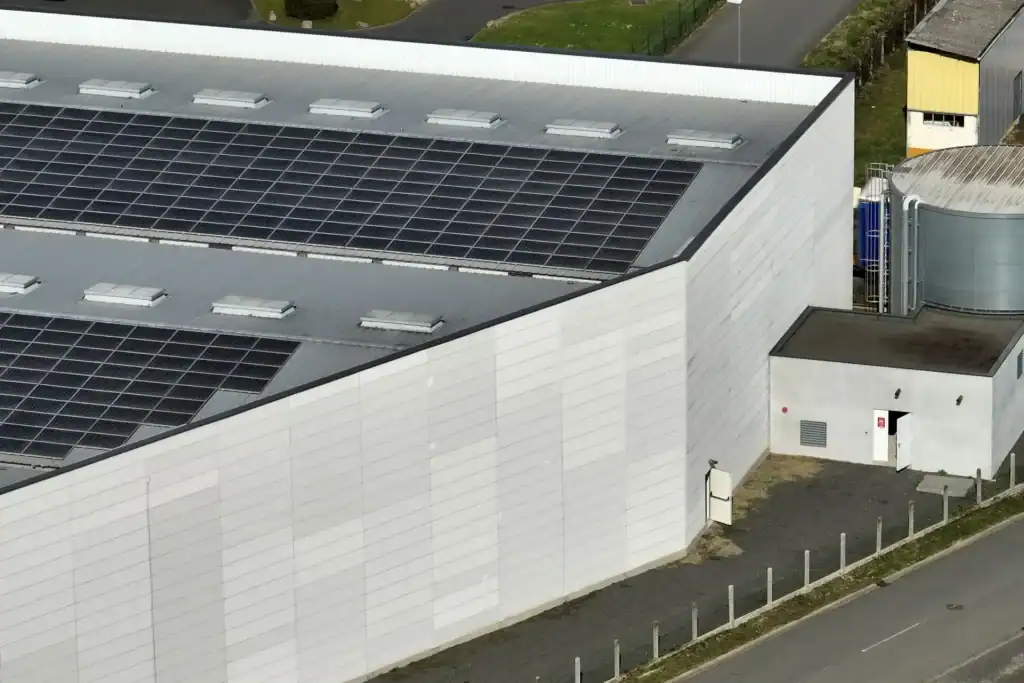
Examples of facilities of this type:
• Photovoltaic panel installations, or solar collectors for hot water,
• Biomass plants powered by wood and pruning waste,
• Electricity cogeneration plants
• Anaerobic digesters for transforming organic waste into biogas
• Heating and cooling networks
There are industrial estates that make use of covered parking areas to install photovoltaic panels for charging electric vehicles, as in Barcelona’s Zona Franca, or that help manage and advise their companies on the use of industrial building roofs for PV panel installations, both for self-consumption, as happens in the industrial estates of Rubí — Rubí Brilla, 2015, Barcelona — and for the implementation of “smart grids” or shared energy networks, energy communities.
Facilities for smart Waste / Resources management
Waste is, in most industrial estates, an example of inefficient management. The usual approach is for each company to manage it individually, with the waste management company offering the best deal, without paying much attention to its treatment, the use that could be made of it, and so on.
Reaching agreements among the business owners of an industrial estate to carry out selective collection by material is one of the opportunities offered by “smart” waste management. All of this is combined with the incorporation of sensor and monitoring technologies.
For this reason, it is advisable to have collection / temporary use / logistics centers for industrial waste, a kind of recycling center for industrial companies. And to have data about these resources that are needed and that are thrown away; data that is well managed and analyzed from a system perspective can provide very valuable information for recovery opportunities.
Initiatives such as joint collection of organic waste from the “Eix Besòs Circular” project in the municipalities of Badalona and Sant Adrià de Besòs, Barcelona, the joint management of agricultural film by agro-industrial companies in the Berguedà region, Barcelona, or exchange platforms for reusable materials such as the Catalonia By-products and Resources Exchange may require these facilities.
Let us not forget that infrastructure of this type also makes it possible to optimize transport, identify recovery / reuse opportunities, reduce administrative costs and, ultimately, obtain high-quality recovery, Magrinyà, 2019.
Facilities for water management
• Regenerated water networks
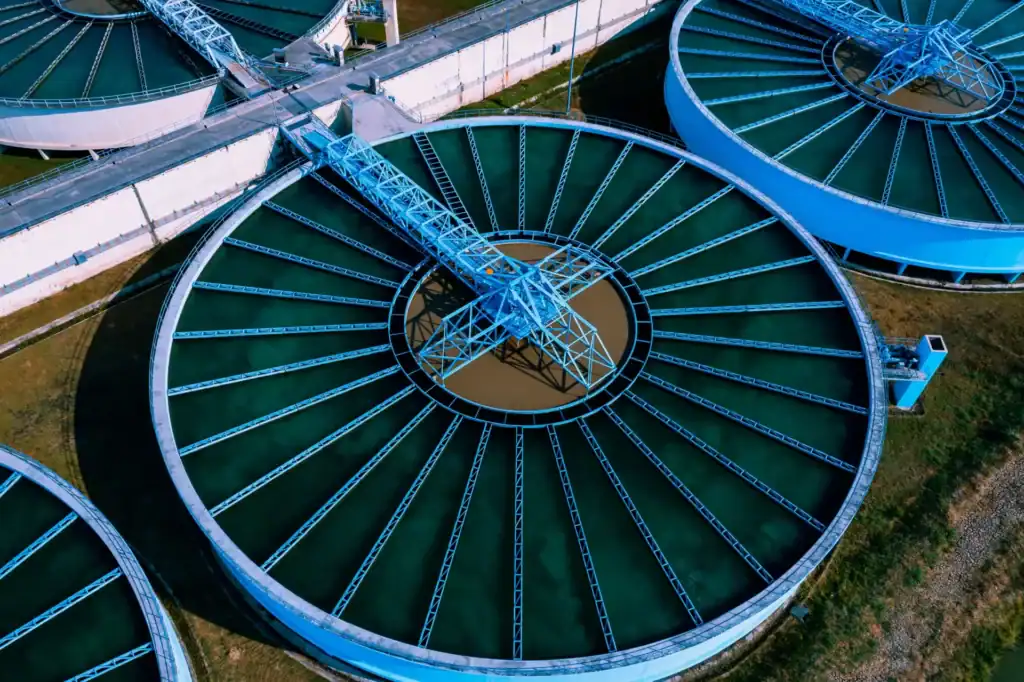
We have wastewater treatment plants that provide regenerated water of excellent quality. There is no reason not to create networks to deliver this water to industries: concrete plants, washing and cleaning equipment, watering landscaped areas, and so on are perfectly compatible applications with the quality of the water leaving a treatment plant. The municipality of Sabadell, Barcelona, for example, through its water company, has implemented a regenerated water network for irrigating the city’s green areas and is extending it to industrial / commercial areas, so the municipality has more drinking water available for its citizens.
• Other water supply sources
Collecting rainwater from the roofs of industrial buildings can be an intelligent solution to water scarcity in certain cases, either as a synergy between companies or as a joint industrial-estate system, Scheerer, 2011. For example, a truck-washing company reduces its consumption of water from the municipal drinking-water network by reaching an agreement with neighboring companies to buy the rainwater they collect from their roofs. The infrastructure here is very simple, but it is sometimes blocked by environmental authorizations.
Sustainable mobility
This is a very widespread problem in industrial areas: the transport of workers and goods, GIZ, 2015. New transport alternatives are continually emerging and, in many cases, for them to be applied in areas such as industrial estates, there must be infrastructure capable of hosting them:
- Charging points for electric vehicles, motorcycles, cars, delivery vans, etc., often linked to photovoltaic installations
- Shared transport systems: BusUp, Rideshare, etc.
- Shared vehicles
- Bike lanes
Infrastructure for innovation
Not all industrial estates and areas can have buildings with shared services for business innovation, but it would undoubtedly be a highly profitable long-term investment. Sharing facilities such as basic material-treatment equipment — shredders, presses, mixers, and so on — 3D printers, Barceló 2016, access services to information and experts, etc., are needs that often cannot be accessed.
But the issue can go further, and having places to carry out tests is often necessary and unavailable. Carrying out tests at real scale, in real use, without regulations that limit precisely what is intended to be tested, “free zones” for experimentation, is sometimes as difficult as having developed the material to be tested itself. But it is essential to develop the technology that allows us to demonstrate that leaving this linear, centralized system is possible — stepping outside the rules that govern it, of course.
Intangible infrastructure: the facilitators of Industrial Symbiosis

As we can see, most of the infrastructure that industrial estates need, or will need, in order to be efficient as they move toward the circular economy, requires close collaboration between companies and an important task of managing the “common good”, the industrial estate and its companies.
Management entities must facilitate the implementation of companies with complementary economic activities that add value and strengthen the industrial estate as a whole, and that through their synergies make it possible to create market niches and become an attraction point for new investors.
But precisely one of the major shortcomings of Spanish industrial estates is the lack of management entities, combined with a lack of business associationism. In Catalonia, only 12.5% of industrial estates have a business association, and only a small minority of these have professional entities managing them. These entities are essential to channel the ecological modernization process they require: to provide the necessary framework of trust, commercial / business connection between companies from different sectors, expert information, financing channels and relations with third parties, including government.
And I finish with industrial symbiosis: Conclusion
In this sense, industrial symbiosis projects are playing a major role in the territory. Cooperation in symbiosis focuses on optimizing the use of those resources that companies do not use internally on their own.
Industrial symbiosis projects are FACILITATORS that, on the one hand, identify opportunities in the “industrial system”, in the territory, and on the other, make them possible. It would be very positive for the management entities of industrial estates to be able to act as “facilitators”, offering traditional management while also working on new business opportunities that require the joint participation of companies. The European INSIGHT project, INSIGHT, 2020, is working precisely on designing the new professional profile of “Industrial Symbiosis Facilitator”.
Industrial symbiosis projects are economically self-sufficient and are sustained with part of the benefits they provide to companies, but they require a start-up period before reaching that situation, usually around 2–3 years. That is why, to date, it has generally been local public administrations that have taken responsibility for launching this type of project: municipal and supra-municipal departments of economic promotion, business, environment, or groupings of all of them, are leading industrial symbiosis projects as a service for companies in their territories, helping to make them more competitive by managing non-recovered resources. Naturally, they work closely with business owners, ideally through the management entities of their associations, in order to fully hand over management once the implementation phase has ended.
INDUSTRIAL SYMBIOSIS identifies business opportunities using surplus resources through business collaboration. Industrial symbiosis encourages industries to work together and exchange materials, water and energy flows among themselves, which increases resilience and economic benefits while reducing environmental impact and costs.
To address all of this, a systemic approach is necessary; we need to see manufacturing processes as part of a broader framework, an Industrial Ecosystem framework, with resource management based on a cross-sectoral approach: an industrial-urban symbiosis in close collaboration with public authorities and society.
Working in symbiosis is smart business!