

Table of Contents
- What is a circular material?
- Circular selection criteria
- Technical and market criteria
- Lessons when selecting circular materials
Have you ever had to select “circular materials”?
With the information available today and the large number of materials that keep appearing, in theory it does not seem too complicated. But in practice, it involves taking a large amount of information into account at the same time and making technical, economic and design decisions that are not always aligned.
Today we would like to share some reflections and criteria on “How to select circular materials” that we have learnt from our latest selection process, for the furniture sector, within the framework of the European project “Francesca”.
What is a circular material?
The first step is to clearly define what we mean by “circular material”.
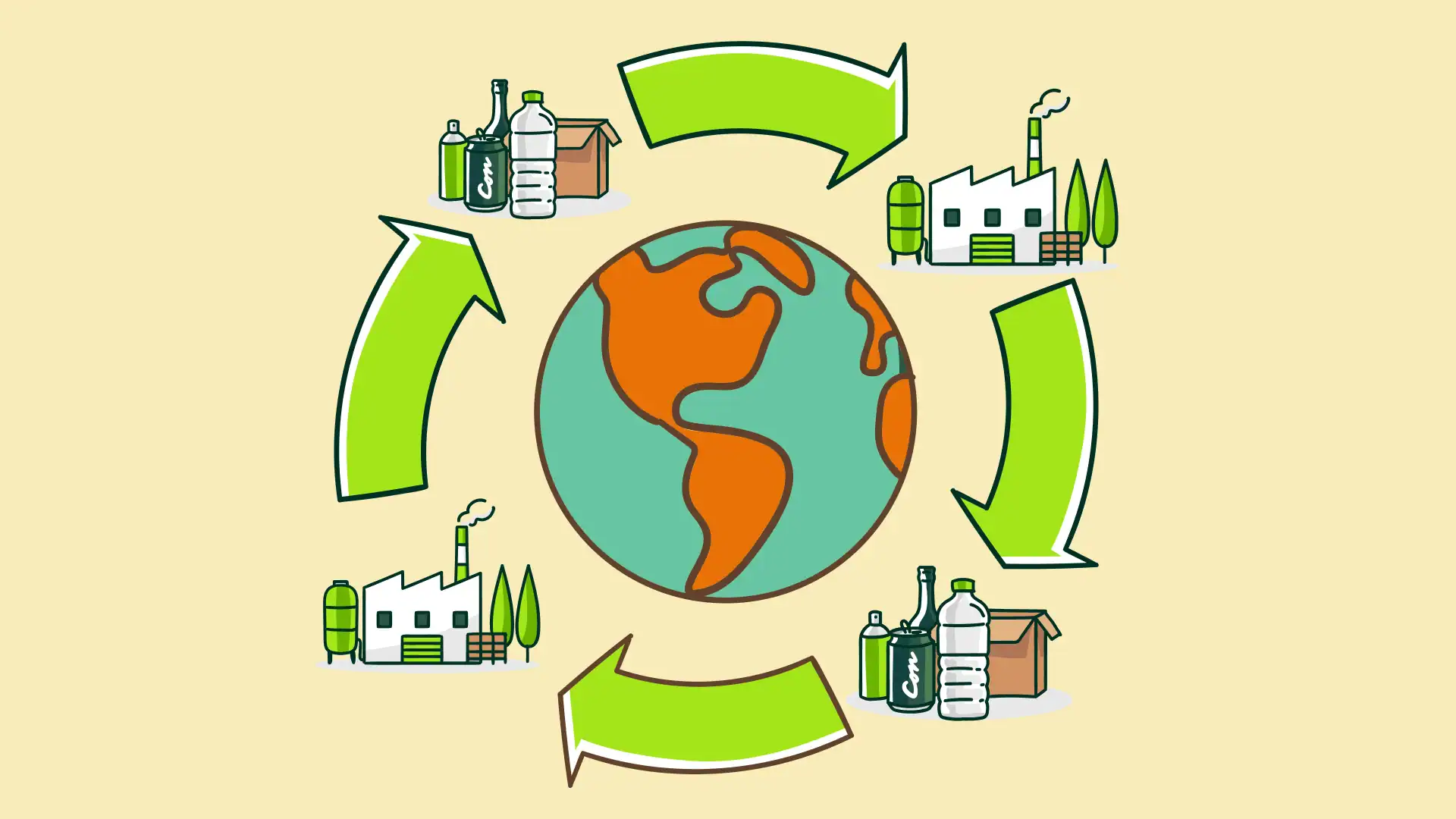
A circular material is any material that contributes to the circularity of the product for which it is intended; in other words, one that helps keep the maximum value of resources within the economy for as long as possible, promoting waste reduction and the efficient use of raw materials. This translates into three main principles:
- It comes from renewable, healthy sources or secondary raw materials.
- It enables high-quality reuse, repair or recycling cycles at the end of its useful life.
- It is safe for human health and the environment.
Circular selection criteria
We are looking for circular materials, so the search and selection criteria must be aligned with the definition above and with the general concepts of the circular economy. Following the three points in the previous definition, we have:
Renewable and/or recycled materials
Here we already find several overlapping criteria, whose relative importance will also depend on other economic and market criteria:
- Bio-based or compostable content
- Recycled content or secondary material
- Low carbon and water impact: energy and resource efficiency in the production of the material
Materials designed to last
Durability criteria are closely linked to the design of both the material itself and the product for which it is intended. It is not enough for the material to be bio-based or recycled; what matters is how it is combined with other materials, what adhesives it contains, and whether there are laminates or coatings that make subsequent recycling more difficult.
- Recyclability or biodegradability: technical potential to return to the production cycle.
- Durability: ability to maintain performance over time, reducing the need for replacement.
- Repairability and maintenance: ease of intervention without compromising its integrity.
- Disassembly: possibility of being separated from other components to facilitate recovery.
“Healthy” materials
- Absence of toxic or hazardous substances
- Safety for the user and their environment
- End-of-life strategy: compatibility with collection and reverse logistics systems
Technical and market criteria
In addition to circularity aspects, materials must meet technical requirements and quality standards, as well as respond to real market conditions. It is important to bear in mind that:
- Bio-based or recycled materials may not always be available at large scale.
- They may depend on emerging supply chains.
- Or they may have a low level of commercial maturity. In these cases, the concept of CRL (Commercial Readiness Level) is often used, similar to the TRL (Technology Readiness Level) used in research and technological development.
- Physical properties may vary between batches. For many applications this is irrelevant, but for others it is critical. The existence of technical and quality certifications, when required, becomes a decisive criterion.
- They may require special machinery or slow down production, which may not affect small new production runs, but can be critical in large, automated facilities.
- Price is also a critical factor, but strategies and business models can be designed to absorb the often higher costs of “circular” materials.
Lessons when selecting circular materials
Selecting circular materials remains a challenge. Based on our experience, these are some key lessons:
- The product context shapes everything. Everything depends on the type of product and the type of industry: the less regulated the final product is, for example, a filler material in construction is highly regulated, and the smaller the manufacturing process, the easier it is to introduce circular materials in a technically and economically viable way, with major environmental and social benefits.
- Many circular materials are still in early market stages. They are often innovative solutions with limited production capacity and commercial structures that are still under development, which makes adoption by large manufacturers more difficult.
- Availability and scalability are critical factors.
A technically suitable material may not be viable if there is no stable or sufficient supply capacity for industrial production. - Dependence on emerging supply chains.
Circular materials often rely on new logistics chains that are not yet fully consolidated, which introduces uncertainty. - Limited commercial maturity.
The use of the CRL concept makes it possible to estimate the material’s level of development and its real capacity for industrial implementation. - Variability in material properties.
Especially in recycled or bio-based materials, there may be differences between batches that are irrelevant in some uses but critical in others. Technical certifications become particularly important here. - Compatibility with existing production processes.
Some materials require adjustments to machinery, tools or manufacturing parameters. In highly automated environments, these changes can become a major barrier. - Impacts associated with the origin of raw materials.
Some bio-based materials come from distant regions, which can increase transport impacts and generate supply uncertainty. - Lack of reliable environmental data.
Many circular materials still lack robust environmental information, making objective comparisons between alternatives more difficult. - Price remains a determining factor.
Circular materials may involve higher costs, especially in the early stages. However, business models and design strategies can be developed to absorb this difference.
In general, and by way of conclusion, circular materials still require a CONSUMER MARKET that justifies investment in certifications and process automation to guarantee supply at market price. It is both a problem of economies of scale and an opportunity for scaling up.
And, as always, a SYSTEMIC VISION is needed: It is not enough to replace one material; design, disassembly, maintenance, logistics and end of life must all be considered as part of the same decision.
- What challenges have you come across?
- Have you worked with circular materials?
- What do you prioritise: performance or circularity?