
Written by: Mireia Bringué
Table of contents
- Technology is only one part of project viability
- Mapping resources and stakeholders helps design the value chain
- Identifying stakeholders is not enough: collaboration must be facilitated
- Before seeking funding, project risks must be reduced
- Regulation must be analysed from the earliest stages
- Analyse the value generated throughout the entire chain
- Supporting each project according to its needs
A promising technology does not guarantee that a bioeconomy project will actually be implemented. To make it a reality, it is also necessary to secure the supply of resources, find markets for the products, coordinate those involved, address regulatory requirements and build an economic model that works.
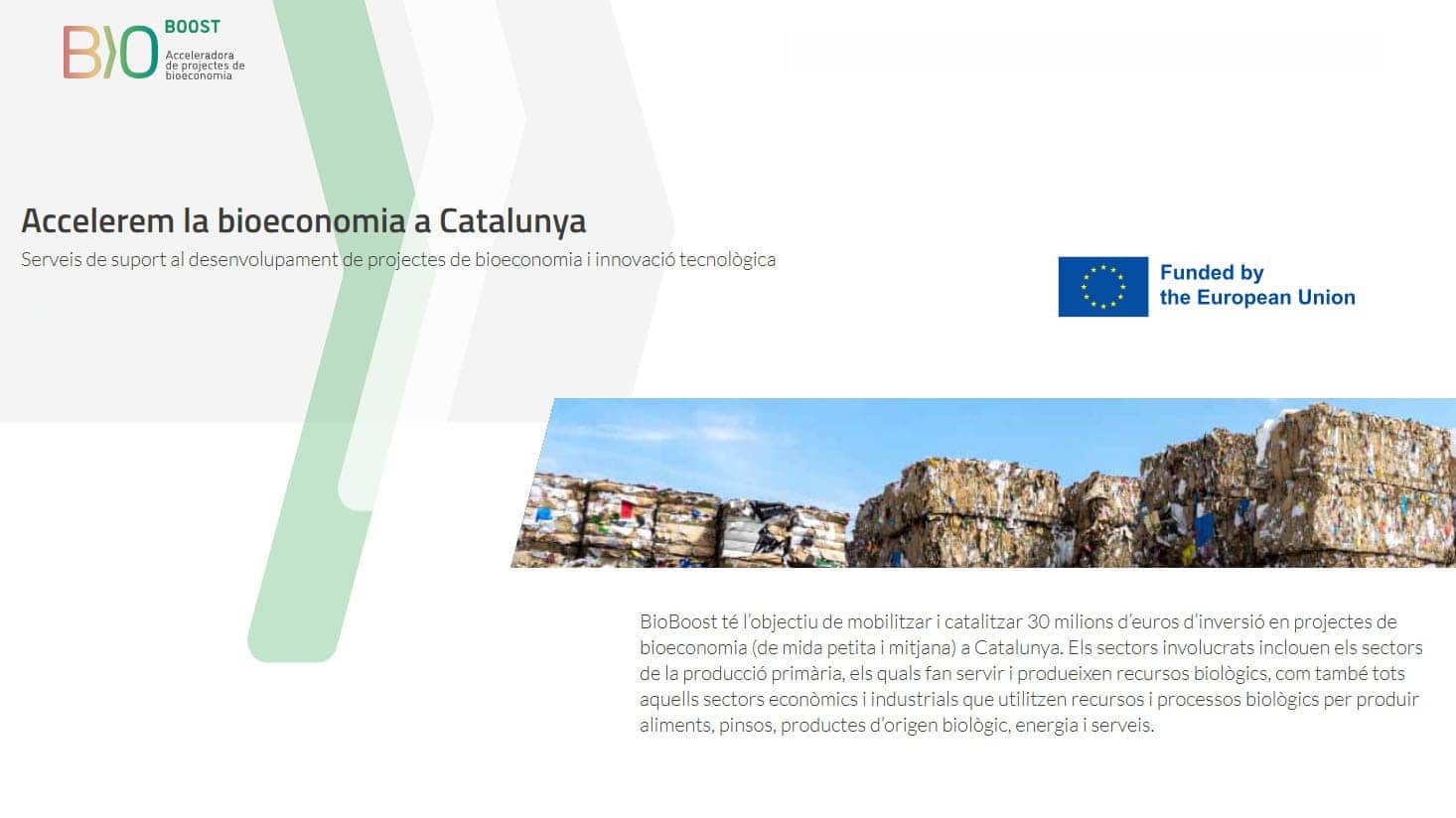
This work —less visible than the technology itself, but crucial— has been at the heart of BioBoost. For four years, this European project has supported circular bioeconomy initiatives in Catalonia through Project Development Assistance (PDA) services. The support has covered technical, legal, business and financial areas, as well as resource and stakeholder mapping, facilitation and impact analysis.
Símbiosy has participated alongside Inveniam, Aeris and RocaJunyent. Drawing on our experience in industrial symbiosis, we have helped connect resources, companies and knowledge so that ideas could move forward with a more comprehensive view of their value chain.
BioBoost assessed 20 initiatives and supported 11 of them with development plans tailored to their needs. Nearly 60 specialised services were provided. The work helped activate four investments, mobilise around €10 million and identify an investment potential of more than €50 million. The services received an average rating of 4.5 out of 5.
Beyond these figures, BioBoost has made it possible to draw lessons that can be applied to other projects and territories seeking to promote the circular bioeconomy.
1. Technology is only one part of project viability.
A solution may work technically and still not be ready for implementation. Is there enough raw material throughout the year? Who will supply it and under what conditions? Who will buy the product? How will transport, permits and investment be covered? Who will make the decisions and assume each responsibility?
In the projects we have supported, some of the main difficulties were not related to the technological process, but to issues such as the lack of reliable data on available resources, the absence of supply agreements or uncertainty regarding the markets for the resulting products.
For this reason, assessing a technology also requires looking at the bigger picture: resources, logistics, market, regulation, funding and organisation. The sooner these questions are addressed, the easier it will be to identify what is missing and guide the next steps.
2. Mapping resources and stakeholders helps design the value chain.
Mapping makes it possible to move from an apparent opportunity to a more precise picture of what can actually be done. For resources, it is important to understand not only quantity, but also quality, seasonality, location, current uses and transport conditions. For products and by-products, their characteristics and current destinations should be analysed, along with other possible applications.
This analysis should be accompanied by stakeholder mapping: who generates or controls the resources, who could transform or transport them, who would use the products and what role public administrations, research centres or financial institutions could play. This helps identify dependencies, potential collaborations and gaps that still need to be addressed.
In the Casa Ametller Agroparc project, we studied how to recover value from agricultural waste generated by its own activities and from nearby farms and forest areas through anaerobic digestion. The mapping helped identify which local resources could feed the process and who could make use of the biogas and other resulting products.
With Labin, a company specialising in fertilisers and bio-based products for agriculture, we analysed both the inputs and outputs of the process. We mapped alternative sources of animal-derived proteins that could be used as raw material and studied the products obtained and their possible uses beyond the agricultural sector, where they are currently used. We also identified companies, research centres and other stakeholders with whom potential collaborations could be explored and scaling supported.
Mapping does not replace technical, economic, commercial or regulatory feasibility studies. It helps guide these analyses and focus them on alternatives with real potential. At Símbiosy, we use it precisely to support decision-making and build value chains adapted to the territory.
3. Identifying stakeholders is not enough: collaboration must be facilitated.
Circular bioeconomy projects rarely depend on a single organisation. A single value chain may involve biomass producers, industries, technology providers, logistics operators, public administrations, research centres, investors and potential users of the final products.
Mapping makes it possible to identify who should be part of this chain. Facilitation helps turn these potential connections into effective collaboration.
The organisations involved may use different languages, work at different speeds and pursue objectives that do not always align. It is therefore necessary to create a shared vision, clarify the roles of each participant, align expectations, manage potential disagreements and keep the project moving forward.
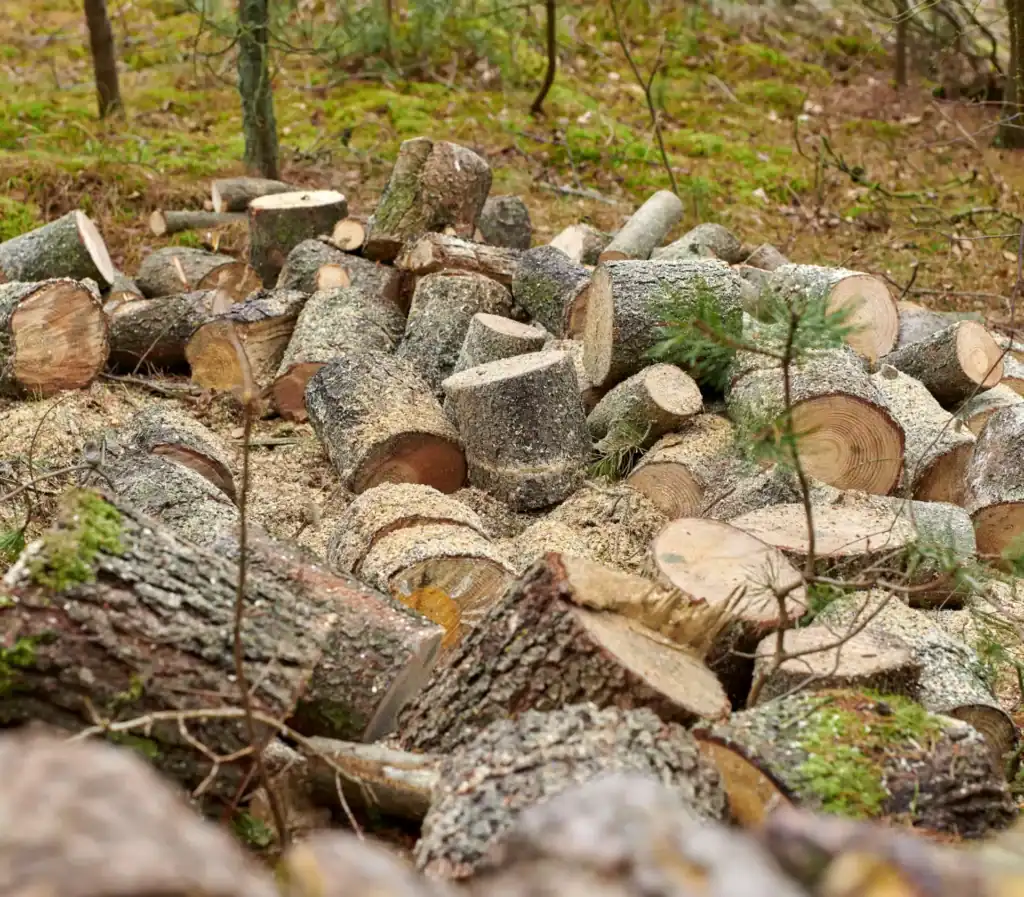
The case of wool valorisation in Tagamanent illustrates this well. Developing a local value chain required more than simply identifying a suitable technology for treating the wool. It was also necessary to connect livestock farmers, processing companies, potential users, research centres and public administrations around a common opportunity. This work made it possible to create an initial network of stakeholders interested in jointly finding solutions for the treatment and valorisation of a resource that often ends up being managed as waste.
Facilitation must be planned from the outset and be allocated specific time, capabilities and resources. Identifying a potential synergy is only the first step: to make it a reality, collaboration must be built and supported.
4. Before seeking funding, project risks must be reduced.
Access to funding is commonly identified as one of the main obstacles for bioeconomy projects. However, looking for investors is not always the first priority.
To assess an opportunity, investors need reliable information, sufficiently validated technology, a defined market, realistic financial forecasts and clarity regarding permits, project ownership and its governance model. They also need reasonable assurances regarding the supply of raw materials and the sale of the products obtained.
Many bioeconomy initiatives are still developing these elements when they begin looking for funding. In addition, their risk profiles may be unfamiliar, especially when they depend on several suppliers, shared infrastructure or cooperative models.
There is also a mismatch in scale. Some initiatives require relatively small or incremental investments, while many funds operate with higher minimum investment amounts. At the same time, the most innovative projects may find themselves in an intermediate position: too advanced for certain grants, but still not mature enough to attract private investment.
Therefore, before presenting a project to potential funders, its main risks need to be progressively reduced. This may involve validating the technology, formalising supply and purchase agreements, completing technical studies, resolving regulatory issues, dividing the investment into phases or combining public and private funding.
Investment does not depend solely on communicating the project more effectively. Above all, it depends on demonstrating that the elements required to make it viable are sufficiently well defined.
5. Regulation must be analysed from the earliest stages.

In the circular bioeconomy, a material may be considered a resource at one stage and waste at another. Its use may be subject to different rules depending on its origin, composition and intended use, for example regarding animal by-products, fertilisers, chemicals, food safety or end-of-waste status. Environmental permits, planning requirements and administrative responsibilities must also be taken into account.
If these issues are reviewed only once the solution has already been designed, they may require changes to raw materials, products, location or technology, with the resulting costs and delays. Regulatory analysis should begin early and help define what can be used, which requirements must be met and which products can be marketed.
Regulation is not a final check carried out once the project has already been designed. It is one of the elements that shapes its design from the outset.
6. Analyse the value generated throughout the entire chain.
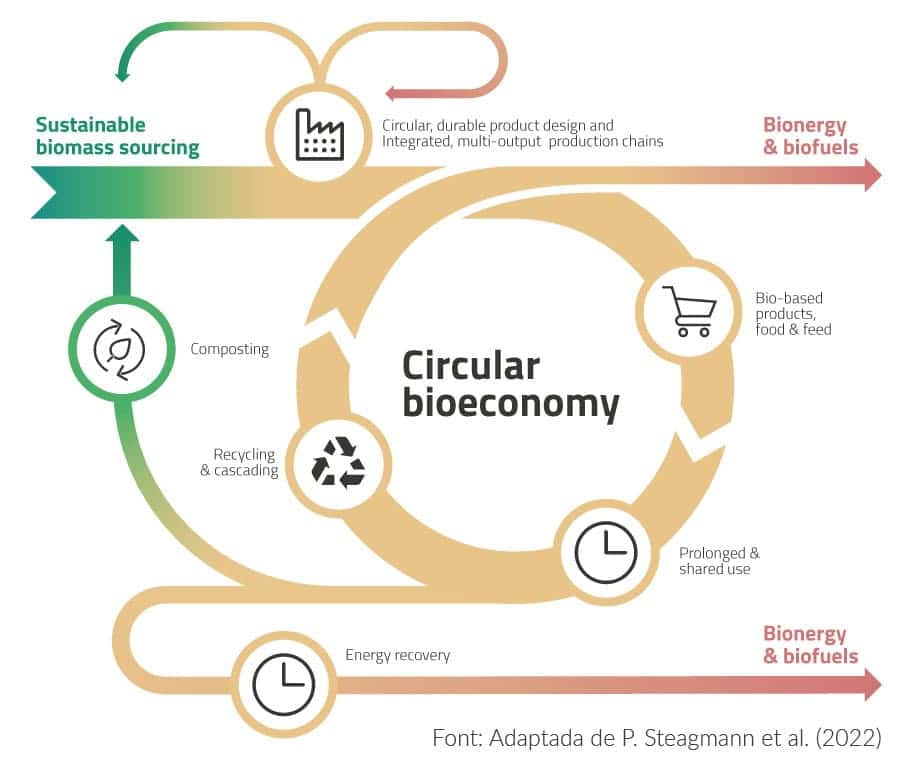
In the circular bioeconomy, the outcome of a project is not measured solely by what a company produces or earns. If a by-product that previously represented a cost becomes raw material for another activity, the benefit can be distributed across several links in the chain: the organisation generating it reduces a management burden, the organisation transforming it creates a product, and the organisation using it gains access to a resource. The territory can also benefit if the activity makes use of local resources and retains jobs and income in the area. We refer to this value created through relationships between stakeholders as systemic value.
The BioBoost experience has taught us that these benefits do not become visible on their own. It is necessary to understand what changes as a result of the project, who gains value and what costs or responsibilities each party assumes. Appropriate indicators can then be selected —for example, resources recovered, management costs avoided, energy produced, emissions reduced or local employment— to describe the results and compare alternatives. The aim is not to accumulate figures, but to measure what the project can genuinely influence.
The lesson learned is that each initiative should be assessed both in terms of its economic viability and the value it generates for the other stakeholders in the chain and for the territory. Identifying and measuring both dimensions helps support better-informed decisions and recognise the conditions that will allow these benefits to be sustained.
Supporting each project according to its needs
BioBoost has also confirmed for us that accelerating projects does not mean offering the same package of services to everyone. Each initiative starts with different resources, stakeholders, technologies and barriers. Support should begin with a diagnosis and its own roadmap, capable of evolving as new information emerges.
One project may need technical support; another may require mapping, market development, regulatory analysis, financial structuring or facilitation. Often, several of these capabilities are needed at the same time. This is why territories need stable support structures that retain knowledge and connect project developers with companies, public administrations, research centres and financial institutions, including after a funded project comes to an end.
Accelerating does not mean skipping stages. It means asking, at the right time, the questions that could bring the entire project to a halt if left until later.